Safety is one of the first things travellers think about when choosing a destination. In Bangladesh, where tourism is growing but concerns about theft, harassment and extortion persist, the tourist police unit carries a large share of that responsibility. This study by Mohammad Anisur Rahaman, Sarder Nurul Amin, Md. Ashrafur Rahman and Md. Noman Amin examines how well that role is working.
Why This Study Matters
Perceptions of safety are shaped not only by actual crime but by how visible, responsive and professional law enforcement appears. Understanding how tourists see the tourist police helps explain whether visitors return, recommend a place and help sustain its local economy.
How The Study Was Done
The authors combined case studies, a tourist survey and interviews, bringing together the views of visitors, residents and police officials at tourist destinations across Bangladesh.
Key Findings
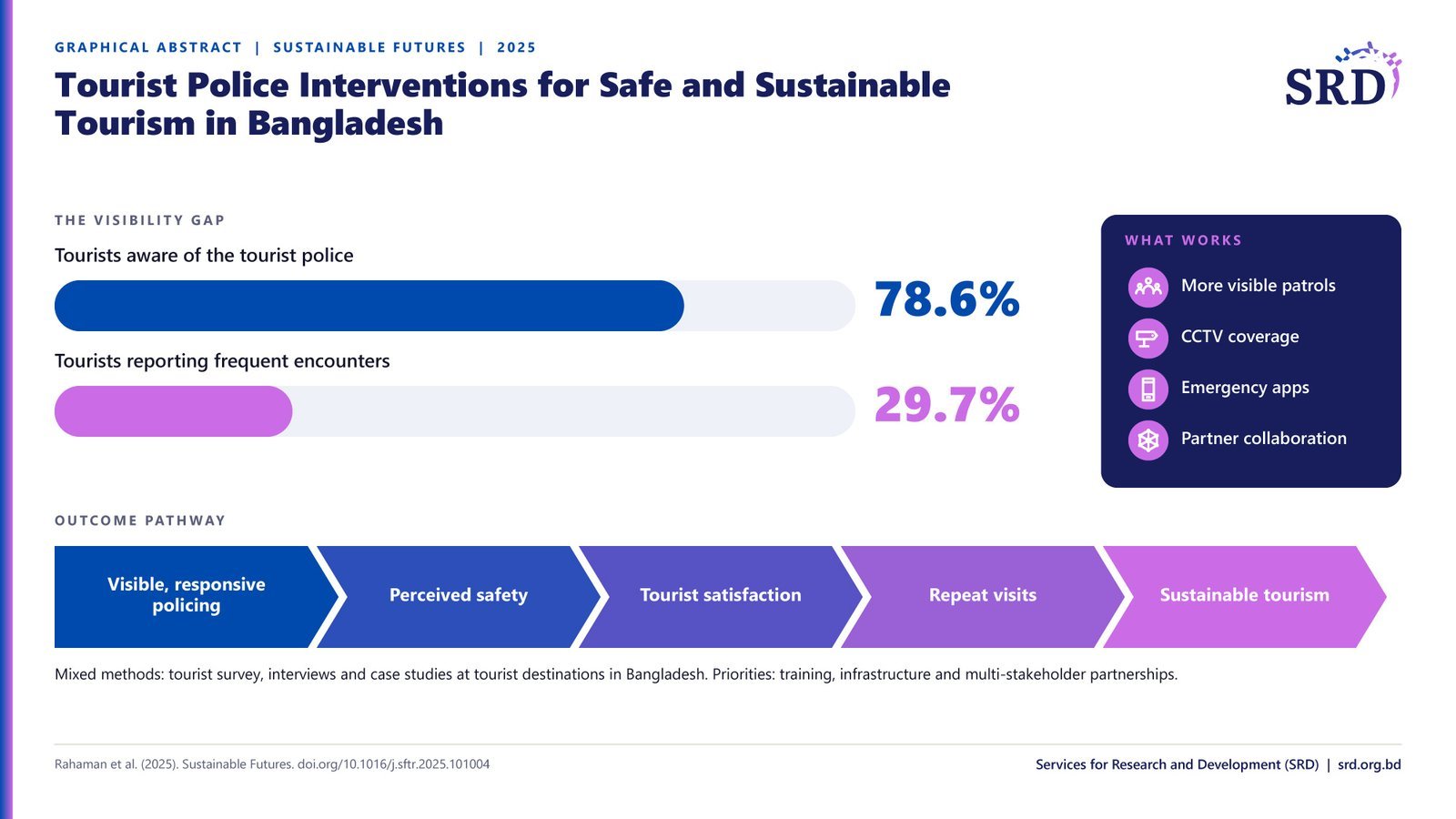
- Awareness is high, contact is low. 78.6% of respondents knew about the tourist police, but only 29.7% reported frequent encounters with them.
- What works: more patrols, technology such as CCTV and emergency apps, and collaboration with local partners significantly raised tourist satisfaction and feelings of safety.
- Safety builds loyalty. Effective policing reinforced perceptions of safety and encouraged repeat visits.
What It Means
A safe, welcoming tourism sector needs better training, stronger infrastructure and multi-stakeholder partnerships. Investing in the tourist police is, in this sense, an investment in sustainable tourism itself.