Autism spectrum disorder (ASD) is a lifelong neurodevelopmental condition that affects communication and social interaction. In Bangladesh, the number of children diagnosed with ASD has grown, but the social world around them has been slow to adapt. This study by Shimon Rahman, Md. Noman Amin and colleagues looks at what children with ASD experience within their families and communities in Gopalganj.
Why This Study Matters
For children with ASD, wellbeing depends heavily on how families, relatives and neighbours respond to them. Negligence at home and exclusion in the community can shape their whole life course, and the pressures fall on parents as well.
How The Study Was Done
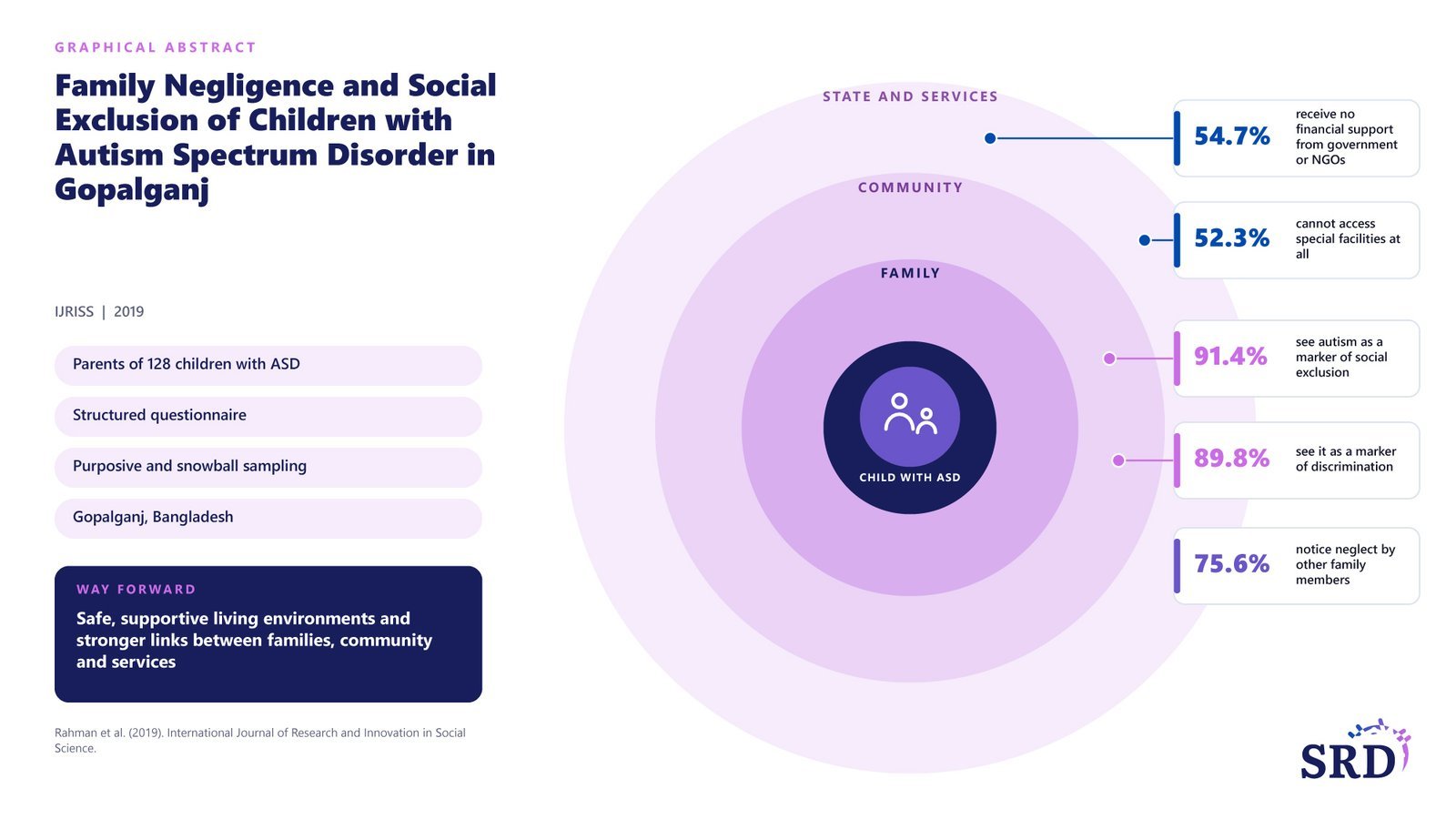
The researchers surveyed families of 128 children with ASD, selected through purposive and snowball sampling, using a structured questionnaire.
Key Findings
- Neglect within families is common: 75.6% of parents noticed their child being neglected by other family members.
- Autism is seen as a marker of exclusion: 91.4% of parents saw it as an indicator of social exclusion and 89.8% as an indicator of discrimination.
- Support is thin: 54.7% received no financial help from government or NGOs, and 52.3% could not access special facilities at all.
- Families withdraw: only 14% of parents usually took their child to social functions.
What It Means
The study calls for safe, supportive living environments for children with ASD, better links between families and local services, and stronger social awareness. It also lays the groundwork for future research on the impact of exclusion over time.